Forget the delicate piping bags and pastel ruffles that dominated cake design for decades. The most exciting cakes circulating on social media right now look less like traditional desserts and more like modern sculptural art pieces designed to be shattered, painted, or structurally deconstructed by guests. When we shift our focus from sweet sugary frosting to architectural form and tactile interactions, the dessert table ceases to be a static display and becomes the main event of the celebration.
The Shattered Isomalt Terrazzo Slab
Best for: Graphic designers, architects, or anyone celebrating a modern milestone in a minimalist loft setting.
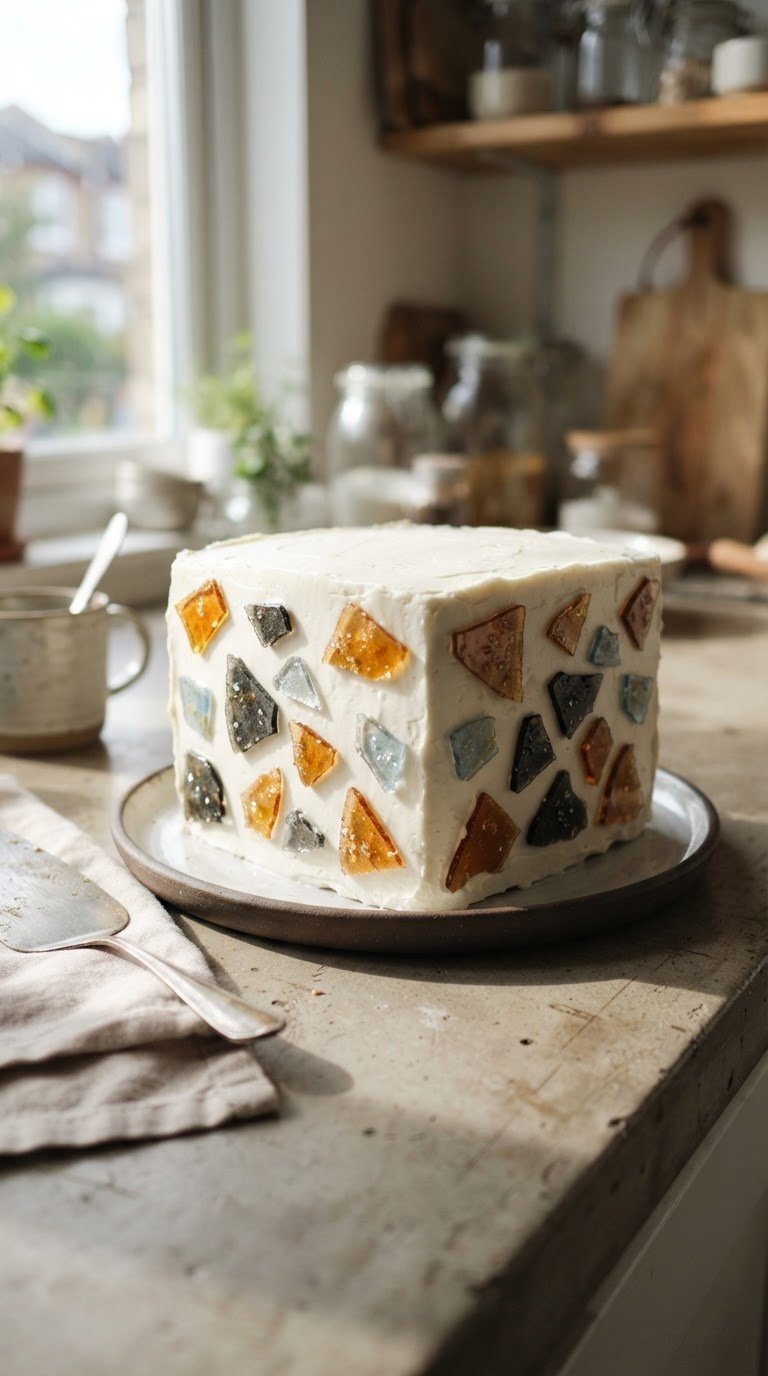
Modern terrazzo isn’t just for kitchen countertops; it is a stunning visual texture when translated into contemporary confectionery art. By embedding shards of colorful, translucent isomalt sugar glass into a smooth, neutral-toned buttercream foundation, you create a striking mosaic pattern that catches natural light beautifully.
This design works best on sharp-edged square or rectangular cakes, where the hard geometry of the cake structure contrasts with the random, organic fractures of the sugar shards. It offers a sophisticated, culinary-forward aesthetic without requiring advanced painting skills.
How to Plan It
- Cook isomalt crystals to 338 degrees Fahrenheit, tint with gel colors, and pour onto silicone mats to cool.
- Crack the cooled sugar sheets into irregular, sharp geometric fragments of varying sizes.
- Frost a double-barrel square cake with a stiff, matte-finish Swiss meringue buttercream.
- Press the sugar shards flat into the fresh buttercream, leaving thin channels of frosting exposed between them to mimic grout.
Planning note: Isomalt is highly sensitive to humidity; apply the sugar shards no more than three hours before serving to prevent clouding or weeping.
💡 Pro Tip: Use a micro-blowtorch very quickly over the embedded shards to restore their brilliant, glass-like shine just before guests arrive.
The Bas-Relief Sculpted Plaster-Style Cake
Best for: Lovers of classical art, gallery openings, or intimate candlelight dinners.
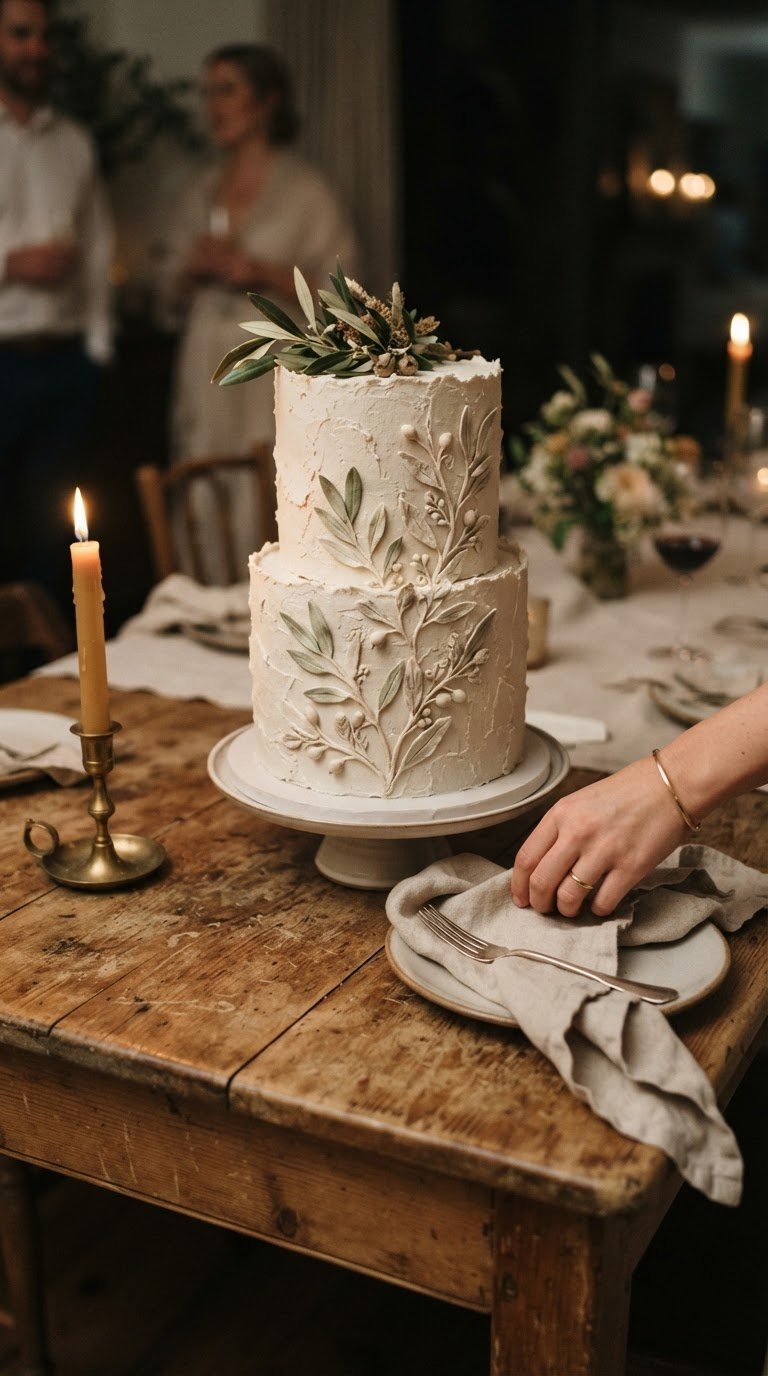
Drawing inspiration from neoclassical architecture and plaster wall moldings, this cake feels heavy, tactile, and highly artistic. Instead of smooth fondant, the surface features thick, textured strokes of modeling chocolate or dense buttercream, shaped into elegant botanical flourishes that rise directly from the cake’s face.
Guests are immediately drawn to the physical depth of the design, which feels more like a carved stone monument than a soft dessert. When sliced, the contrast between the dense, sculpted exterior and the soft, moist interior layers provides a delightful sensory surprise.
Planning note: Modeling chocolate holds fine detail much better than standard buttercream in warm indoor venues.
The Dried-Herbarium Wafer-Paper Flora Cake
Best for: Garden parties, botanical enthusiasts, and low-key backyard celebrations.
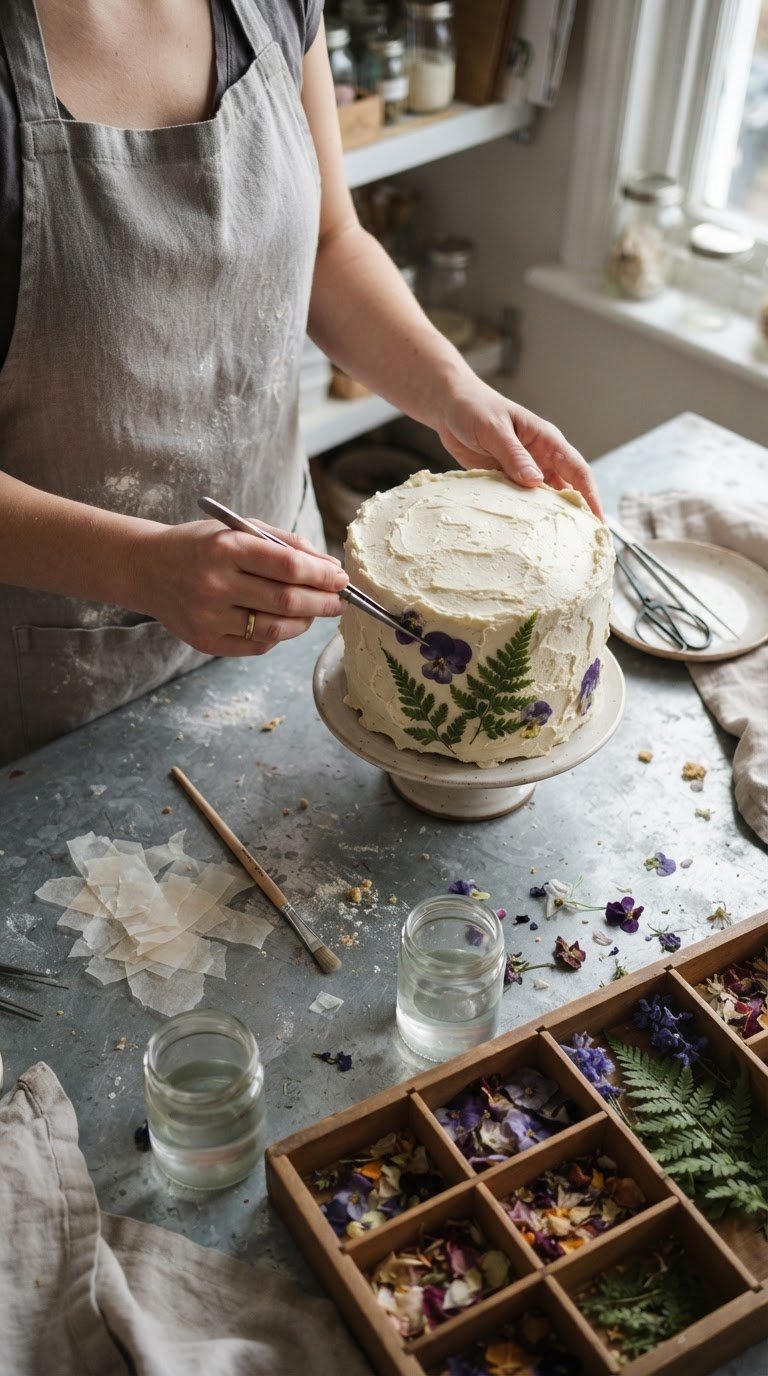
This design turns cake decorating into a botanical study, utilizing delicate wafer paper and pressed edible flowers to recreate the look of vintage museum specimens preserved under glass. The wafer paper is lightly hydrated, torn, and layered to look like aged parchment paper wrapping the cake.
Pressed pansies, violas, and dill sprigs are then delicately adhered to the surface, creating an organic, whisper-thin layer of botanical art. It is a quiet, elegant centerpiece that values natural texture and scientific detail over bright, artificial colors.
Planning Checklist
- Edible pressed flowers (pansies, borage, or marigolds) thoroughly dried
- Premium potato-starch wafer paper torn into organic, deckled sheets
- Edible glue or piping gel applied with a fine-bristle brush
- A semi-naked base cake frosted with pale ivory buttercream to let the flora stand out
Planning note: Ensure all flowers used are certified pesticide-free and culinary-grade.
The Breakable Chocolate Smash-Dome with Hidden Truffle Center
Best for: High-energy gatherings where you want a playful, theatrical alternative to cutting a cake.
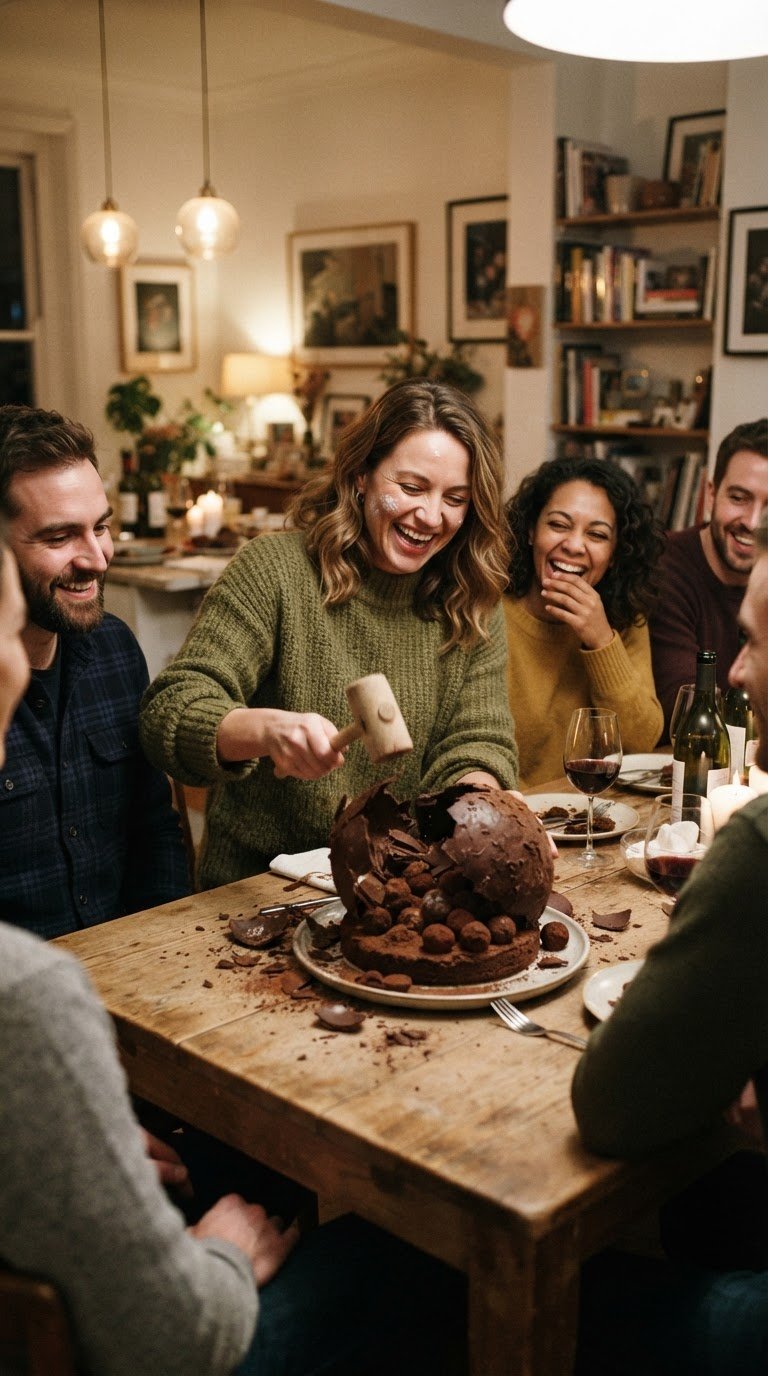
We wanted our daughter’s thirty-something gathering to feel energetic and collaborative rather than passive, so we opted for a cake that required manual destruction before anyone could eat. Instead of blowing out candles, we handed the guest of honor a small, polished wooden mallet.
Sitting atop a pristine chocolate-coated base cake was a gleaming, tempered dark chocolate dome. With a firm, satisfying tap, the dome fractured cleanly into dozens of glossy shards, revealing a lush mound of hand-rolled raspberry truffles nestled in cocoa nibs underneath. The collective gasp from the table was far more rewarding than any traditional song.
💡 Pro Tip: Coat the inside of the chocolate dome with metallic silver luster dust before assembly so it flashes brightly when cracked open.
The Gravity-Defying Floating Tier with Invisible Dowels
Best for: Budget-conscious hosts who want a high-end, gallery-worthy installation effect.
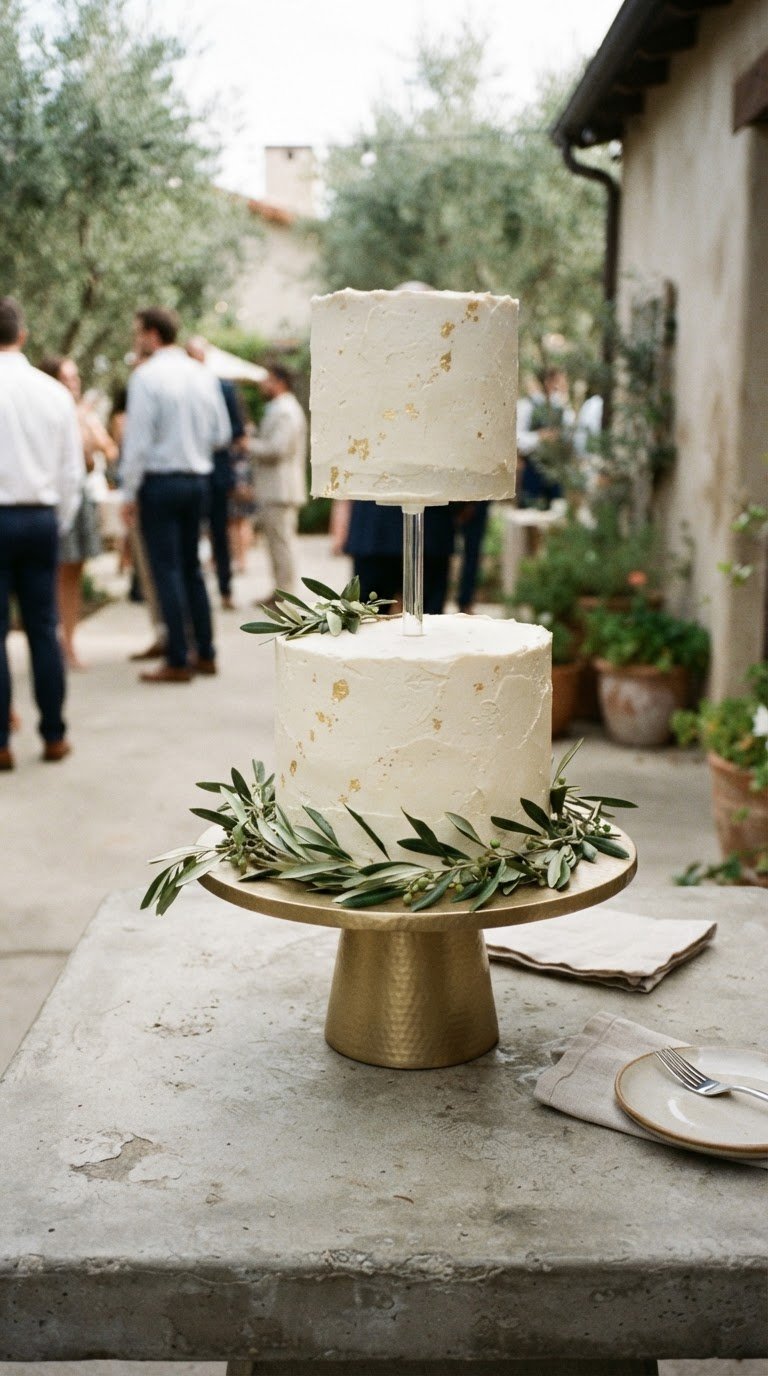
Achieving a jaw-dropping structural feat doesn’t require an engineering degree or expensive specialty equipment. This architectural cake features a distinct, empty space between two cake tiers, making the top level appear to float unsupported in mid-air.
The secret lies in an inexpensive acrylic spacer block hidden inside a minimalist floral arrangement or sculptural object. By keeping the design elements clean and the color palette limited, the focus stays entirely on the impossible negative space between the cake layers.
Budget Priorities
- Central acrylic cake stand support: $15
- Two dense, chilled sponge cakes: $20
- Fresh eucalyptus or structural branches to conceal the center rod: $10
- Total estimated structural cost: $45
Planning note: Assemble this cake directly at the venue; transporting a top-heavy floating tier in a car can cause structural shifting.
The Asymmetric Multi-Level Block Cake with Exposed Edges
Best for: Art school graduates, design lovers, or industrial-loft dinner parties.
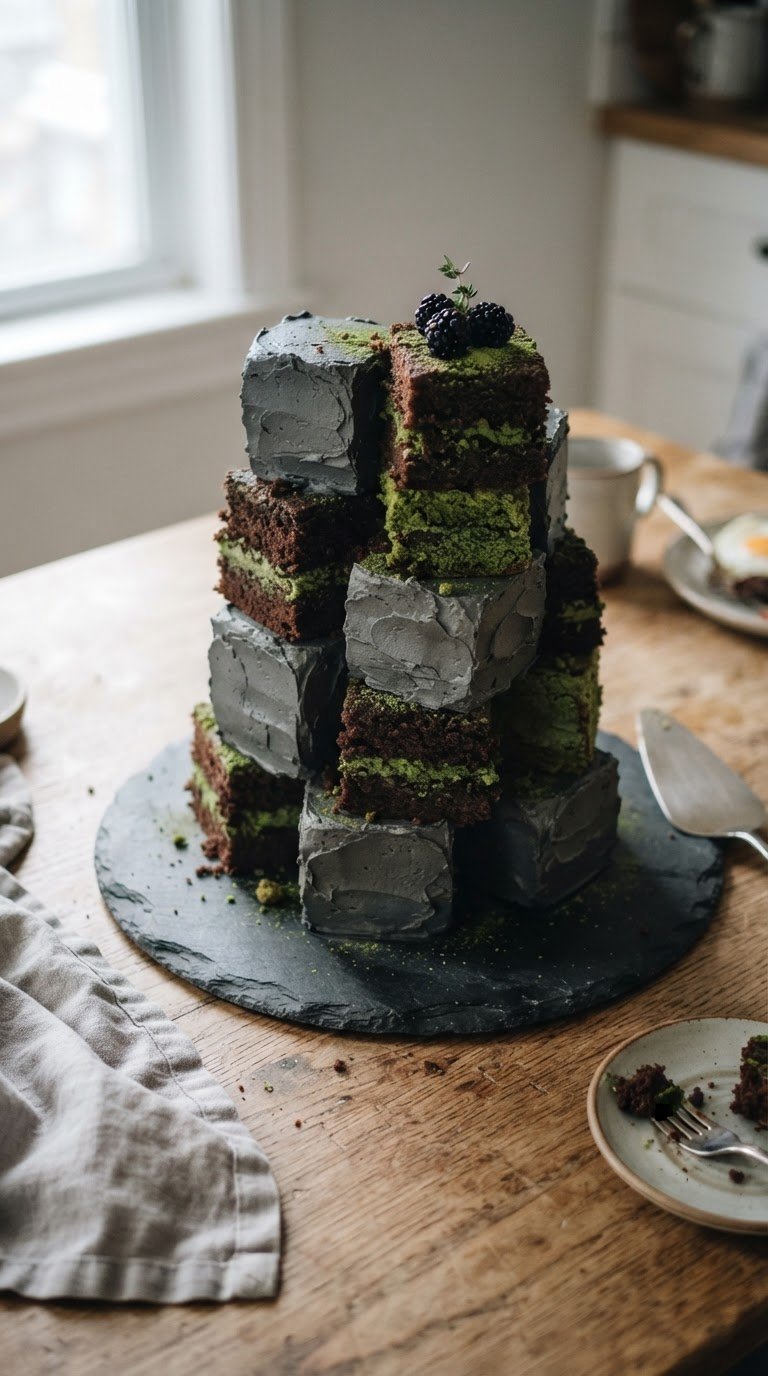
Taking cues from Brutalist architecture, this concept rejects the soft roundness of traditional cakes in favor of sharp, staggered blocks. The cake is built from square slabs stacked at contrasting angles, with some edges left entirely unfrosted to show the rich color and crumb of the cake layers inside.
This structured asymmetry feels incredibly fresh and sculptural. By balancing sleek, smooth frosted walls with the earthy, organic texture of the exposed cake crumb, you create a visual rhythm that holds the eye from every angle of the room.
How to Plan It
- Bake three thick sheet cakes and cut them into precise, clean-edged squares of varying sizes.
- Stack the squares asymmetrically, offsetting the corners of the top layers at 45-degree angles.
- Apply a scraping of sharp-edged, matte buttercream to select sides, leaving other flat faces completely raw.
- Use a metal bench scraper to keep the plastered edges razor-sharp and geometrically perfect.
Planning note: Use a dense cake recipe, like a pound cake or mud cake, to ensure the exposed edges don’t dry out or crumble during display.
The Interactive Edible-Ink Watercolor Canvas Cake
Best for: Creative, hands-on gatherings where guests love to collaborate and play.
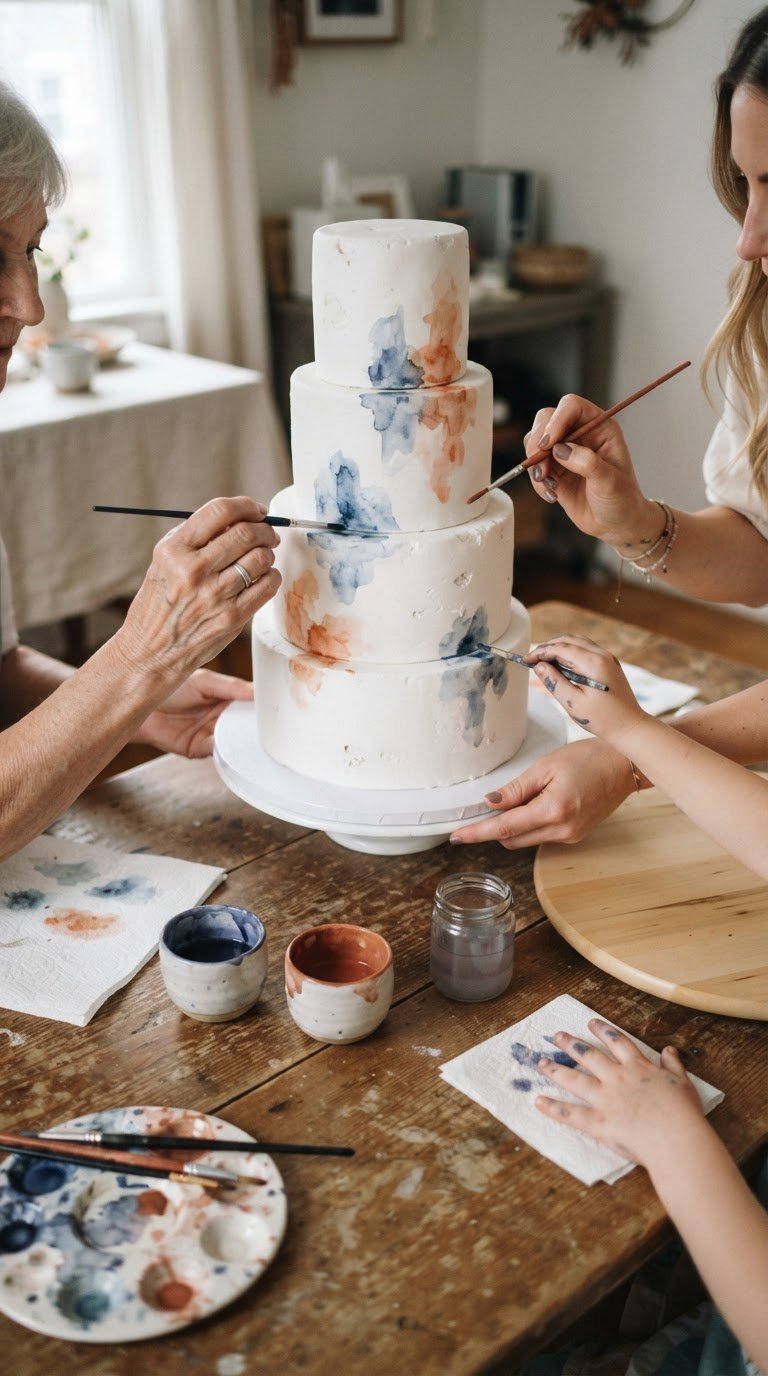
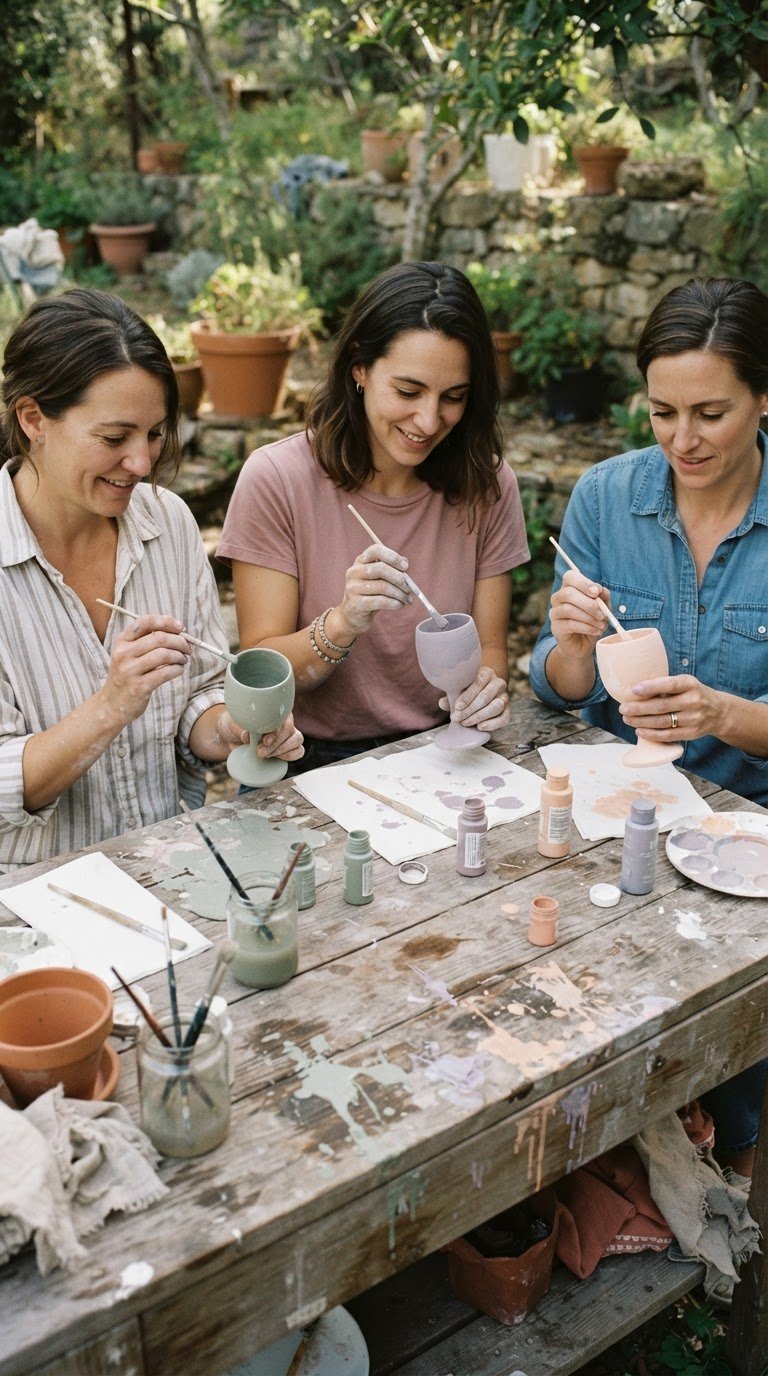
This design completely dissolves the boundary between the host, the guest, and the food. The cake is treated as a blank canvas, wrapped in pristine white, dry-fondant panels that mimic cold-press watercolor paper.
At the party, a palette of edible food dyes diluted with high-proof alcohol is laid out alongside soft paintbrushes. Guests are invited to step up to the table throughout the evening and add their own brushstrokes, hand-painted details, or written wishes directly to the cake’s surface, turning the dessert into a collaborative piece of living art.
Planning note: Provide paint palettes with clear labeling so guests know which colors are sweet, sour, or neutral-flavored.
💡 Pro Tip: Use 190-proof clear alcohol instead of water to dilute the food coloring; it evaporates almost instantly, preventing the fondant canvas from getting sticky or melting.
When planning your next dessert centerpiece, step away from standard decorating templates and choose one tactile or structural element that invites your guests to look closer, ask questions, or physically participate. Whether you choose to shatter a sugar-glass mosaic or invite your friends to paint directly onto a fondant canvas, the most memorable cake is one that transforms a simple slice of dessert into an interactive, shared experience.