The scent of freshly popped corn, the bright stripes of a handmade canvas banner flapping in the breeze, and the sudden hush of a waiting crowd. Bringing the magic of a vintage circus to life in your backyard doesn’t require rented trucks or mountains of plastic disposable junk. By transforming everyday household objects into tactile, screen-free challenges, you can craft an immersive experience where every young guest steps into the ring as a star performer. These sustainable, high-energy games will capture the old-world charm of the big top while keeping your party focused on pure, nostalgic play.
The Tightrope Walk of Courage
Best for: Ages 4-7 seeking a theatrical test of coordination and balance.
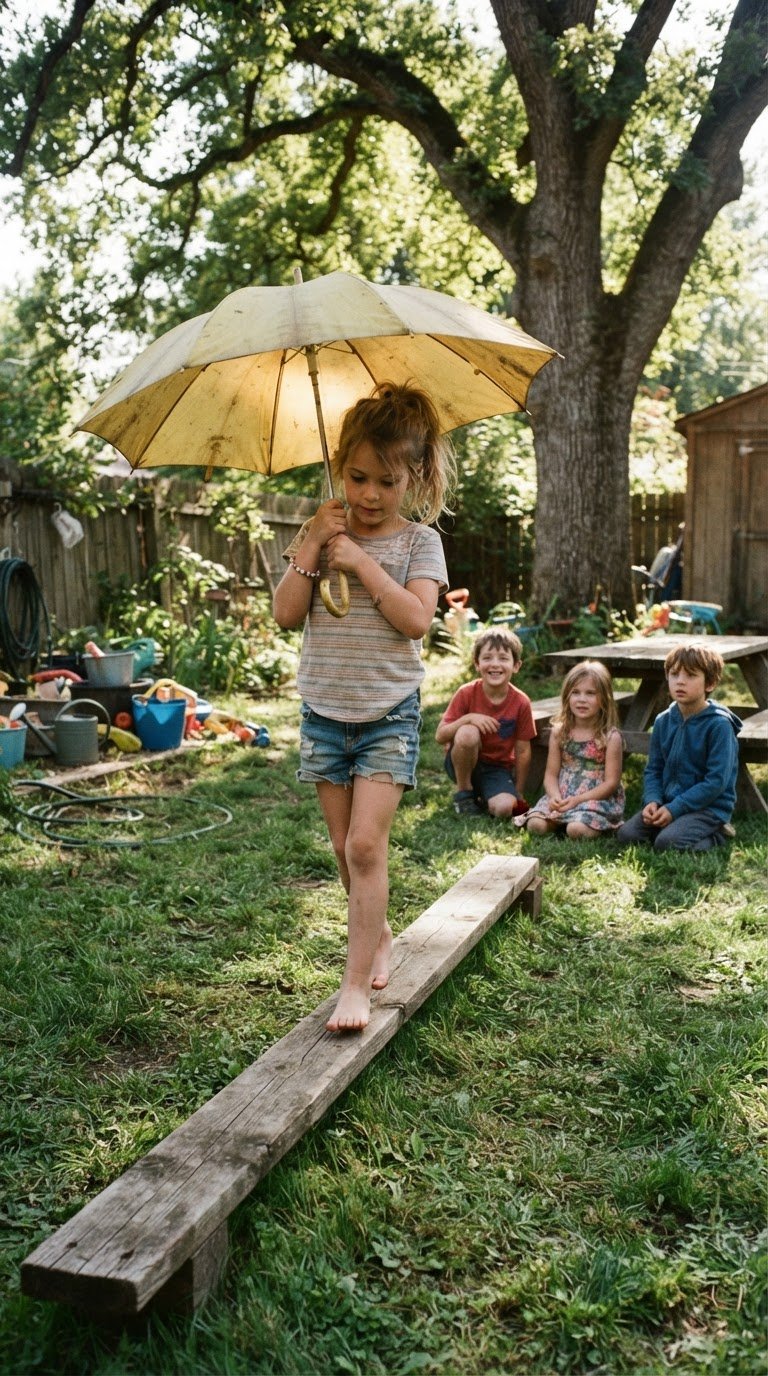
Imagine the suspense of the high-wire act brought down to a safe, toddler-friendly elevation. This activity invites young performers to test their balance on a low wooden beam set mere inches above the lawn. Children can use a faded vintage parasol or a long wooden dowel to steady themselves as they make their way across the ‘deadly drop’ to the safety of the opposite platform.
To heighten the theatrical flair, draw a chalk safety net on the grass directly beneath the beam. The rest of the crowd can watch in hushed anticipation, offering a dramatic gasp if a performer wobbles and a roaring round of applause when they successfully reach the other side. It is a fantastic way to open the games with a sense of quiet focus and individual achievement.
💡 Pro Tip: Use a sturdy 2×4 piece of lumber sanded smooth and painted with a red-and-white spiral pattern to resemble a classic circus pole.
The DIY Mighty Strongman Hammer Strike
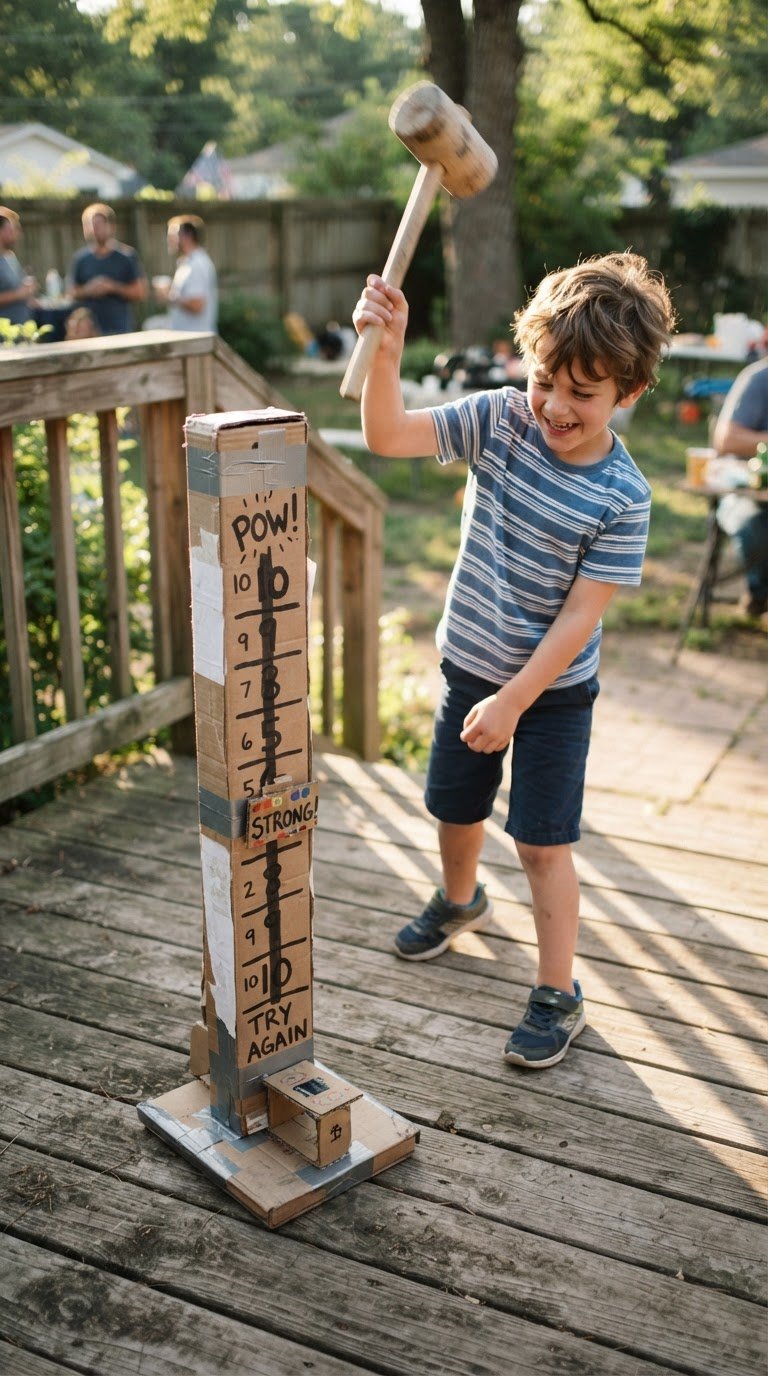
No classic sideshow is complete without a test of physical strength. This handmade version of the iconic high-striker uses a long cardboard mailing tube as the tower and a sliding wooden block on a simple fulcrum. Instead of heavy iron, children swing a soft, fabric-wrapped mallet to send a wooden marker soaring up to strike a clanging metal tin.
This setup allows kids of all physical abilities to participate, as the fulcrum can be adjusted to make the bell ring with even a gentle tap. It adds a delightful acoustic element to your backyard carnival, with every successful strike rewarded by a satisfying metallic chime.
How to Plan It
- Build the tower using a heavy-duty cardboard carpet roll core painted with numbers 1 to 10.
- Craft the mallet head from a lightweight foam block wrapped in brown canvas fabric.
- Hang a recycled aluminum pie tin at the top of the tower to serve as the clanging bell.
Planning note: Secure the base of the cardboard tower to a heavy wooden shipping pallet to keep it steady during enthusiastic swings.
The Vintage Popcorn Bucket Beanbag Toss
Best for: Budget-conscious hosts looking to reuse old holiday popcorn tins and scrap fabric.
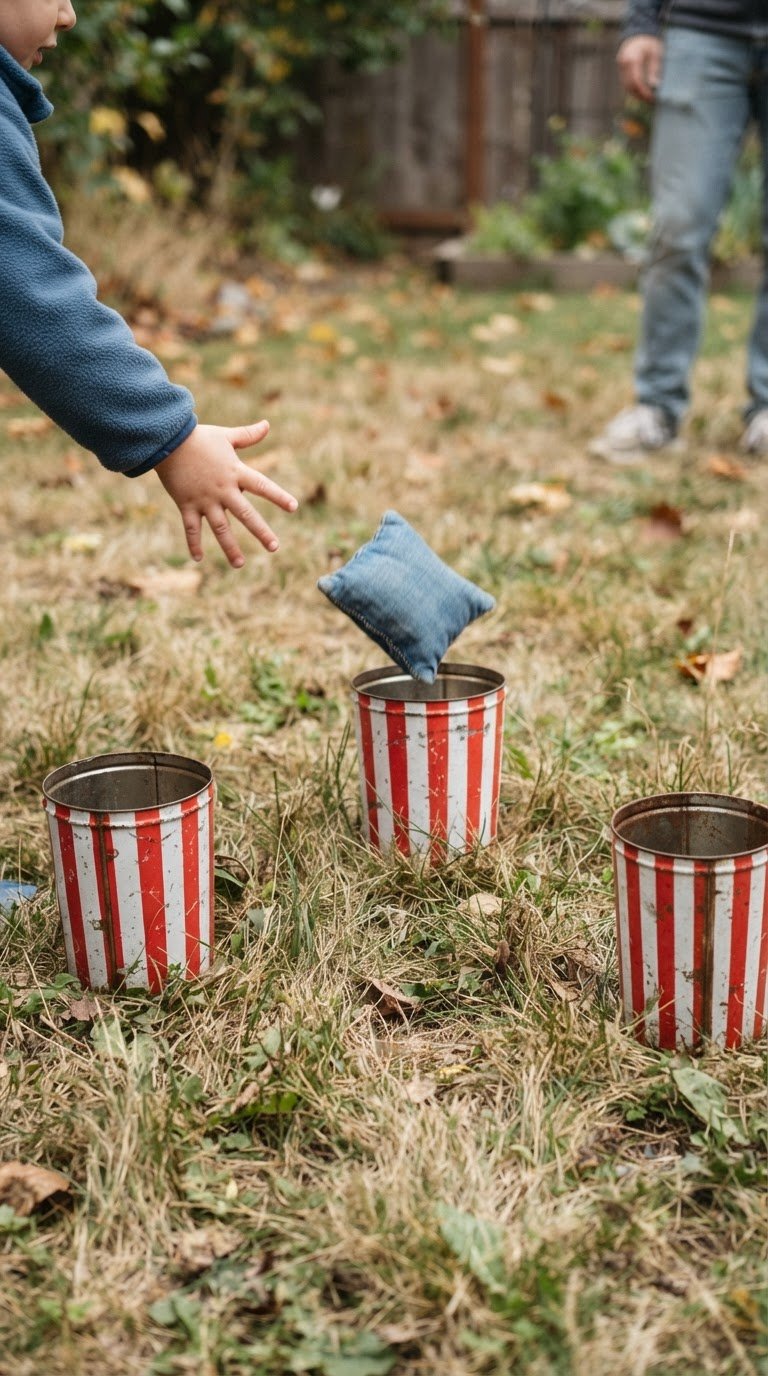
This simple, low-waste classic utilizes large metal popcorn tins or wooden crates that you might already have tucked away in your pantry or garage. By painting the containers with bold red and white stripes, you instantly create a vintage carnival aesthetic without spending a dime on new plastic targets.
Kids take turns tossing weighted fabric beanbags into the containers from varying distances. Because this game is highly customizable, you can easily adapt the challenge level on the fly, moving the throwing line back for older kids or letting younger toddlers stand right at the edge of the buckets.
Budget Priorities
- Upcycle three metal popcorn tins or wooden crates with simple non-toxic paint.
- Sew beanbags from scrap denim or canvas filled with dried lentils or beans.
- Assign different ticket values to each bucket size to encourage friendly competition.
Juggling Scarves and Cotton Ball Stars Academy
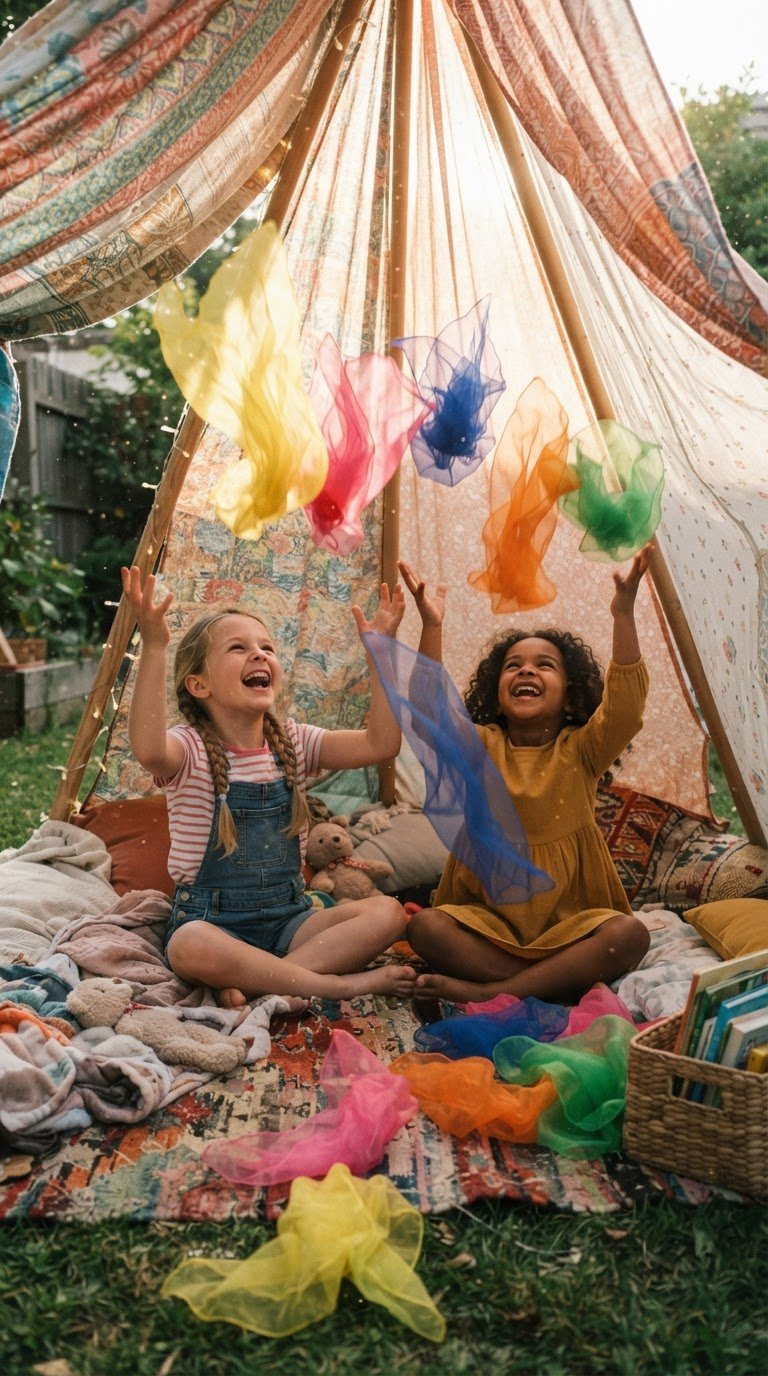
Teaching children to juggle can often lead to frustration when heavy balls drop constantly. This academy bypasses that obstacle by using feather-light chiffon scarves and fluffy, oversized cotton balls. The slow, floating descent of these materials gives young eyes and hands plenty of time to track and catch, making the art of juggling accessible to beginners.
An adult leader can guide the group through basic coordination movements, starting with single throw-and-catch sequences before moving to the classic cross-hand pattern. The children feel an immediate sense of mastery, and the colorful scarves swirling through the air create a beautiful, kinetic spectacle in the backyard.
How to Plan It
- Distribute three lightweight chiffon scarves to each child in vibrant circus primary colors.
- Demonstrate the slow-motion ‘cross-catch’ pattern with exaggerated physical movements.
- Introduce puffy cotton ball clouds wrapped in silver thread for a tactile challenge.
💡 Pro Tip: Have the children practice while sitting down first to keep their feet planted and limit running after runaway scarves.
Leaping Lions Through the Ribboned Fire Hoop
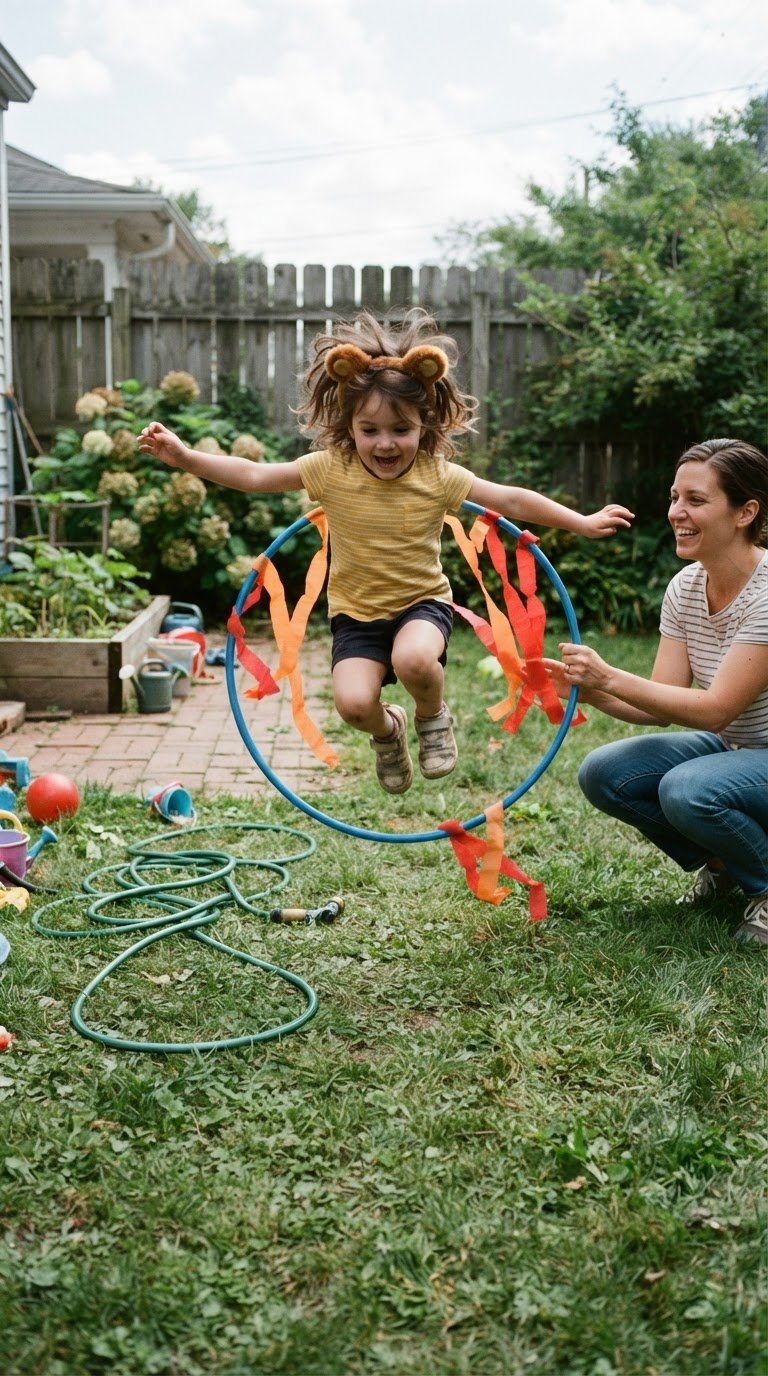
Little Leo was hesitant at first, adjusting the fuzzy felt lion ears that slipped slightly over his forehead. But as the crowd of parents began to play a soft, rhythmic drumbeat on empty metal tins, he let out a playful roar and sprinted across the lawn. In one smooth motion, he leaped cleanly through a hula hoop decorated with shimmering orange and red tissue paper ‘flames’ held by his older sister.
This imaginative obstacle turns a simple running jump into a grand theatrical performance. Children love the physical thrill of leaping, and the visual effect of the paper ribbons parting around them makes every jump feel like a daring feat worthy of the center ring. It is an excellent game for burning off high-energy excitement mid-party.
The Lightning-Fast Clown Makeup Relay
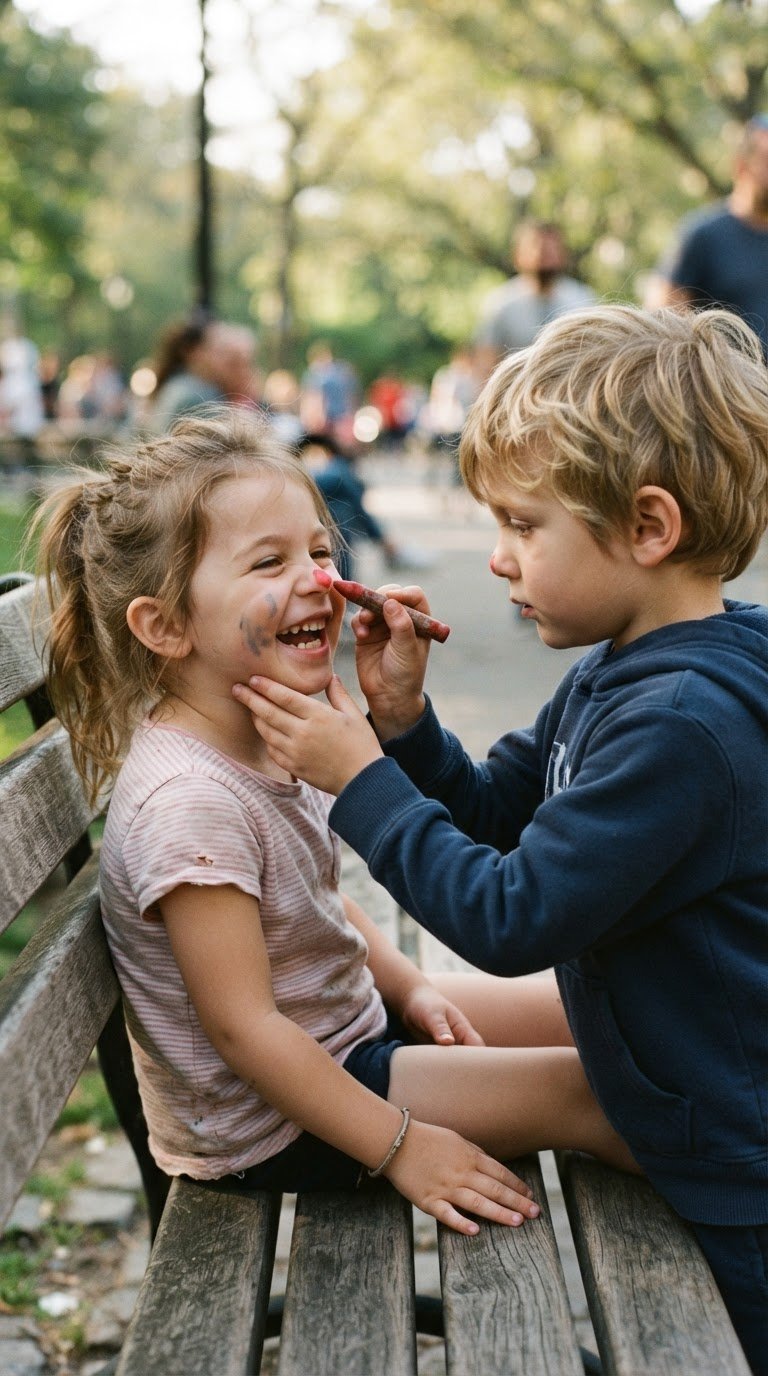
This hilarious experience turning guests into clowns relies on quick teamwork and skin-safe, natural face paint sticks. Divided into two teams, players race one by one to a makeup station where a designated ‘canvas’ teammate is waiting. Each runner is allowed to add only one specific feature—a red nose, a blue star over the eye, or giant drawn-on eyebrows.
The clock ticks down as the teams work together to create the most spectacular and chaotic clown faces possible. The results are guaranteed to be delightfully messy, imperfect, and incredibly funny, offering a fantastic photo opportunity for parents and a memorable bonding moment for the kids.
Planning note: Provide plenty of damp cotton cloths or warm washcloths at the finish line for easy, eco-friendly cleanup.
💡 Pro Tip: Use solid makeup sticks rather than wet pots and brushes to keep the relay moving quickly and avoid spills on clothing.
The Ringmaster’s Grand Prop Mimicry Challenge
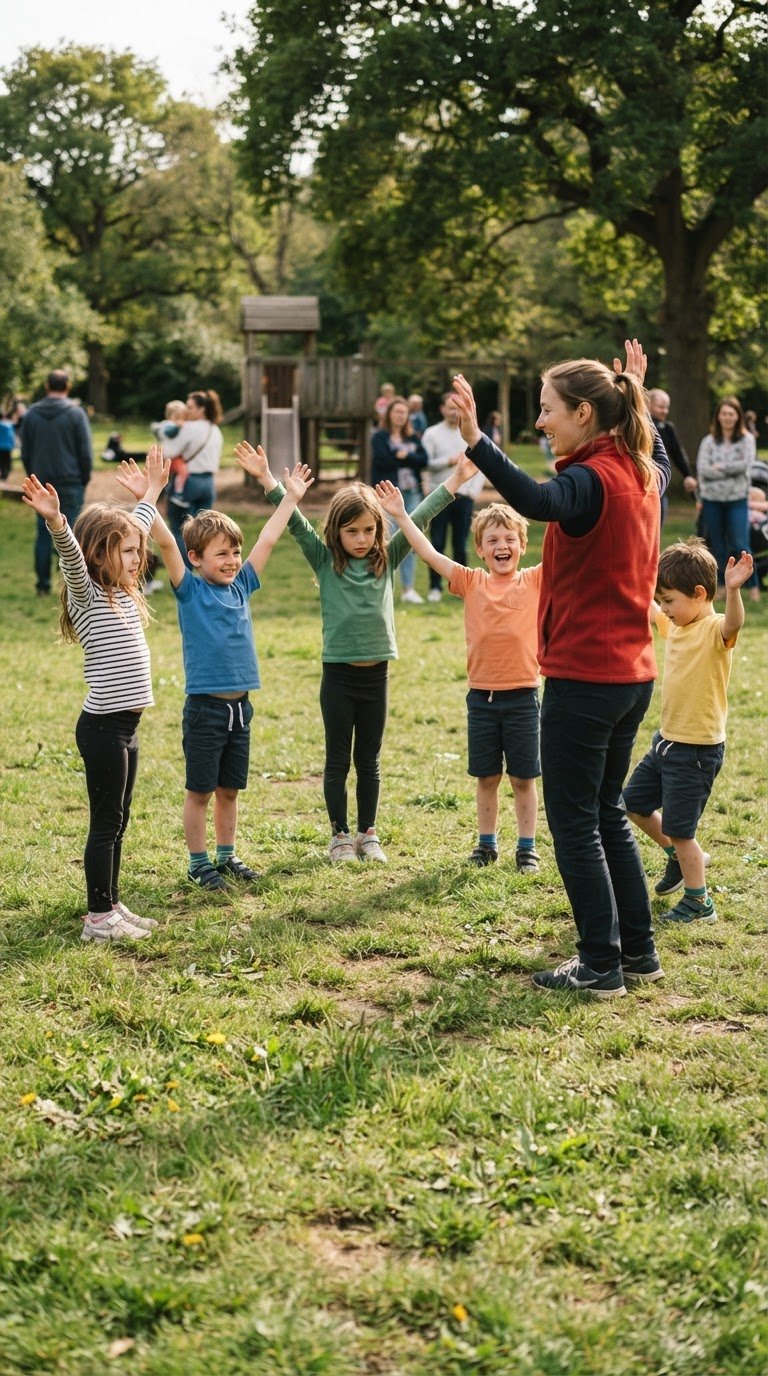
An active follow-the-leader game that relies entirely on physical comedy and theatrical flair. The leader, wearing a simple red felt vest and carrying a cardboard megaphone, stands on a soapbox and performs various dramatic circus feats. The children must mirror these movements as accurately and dramatically as they can.
From slow-motion tightrope walking and heavy elephant stomping to silly clown tumbles, this game channels the natural theatricality of children. It requires zero physical props, making it an incredibly low-waste and zero-cost option that can be deployed at a moment’s notice to fill an unexpected gap in the party schedule.
Planning Checklist
- Designate a dramatic wooden soapbox for the ringmaster to stand on.
- Incorporate slow-motion balancing, quick clown tumbles, and heavy elephant stomps.
- Reward the most theatrical performer with a vintage brass bell ring.
The Velcro Dart Board Sideshow Shootout
Best for: All ages looking for an inclusive, low-cost target game.
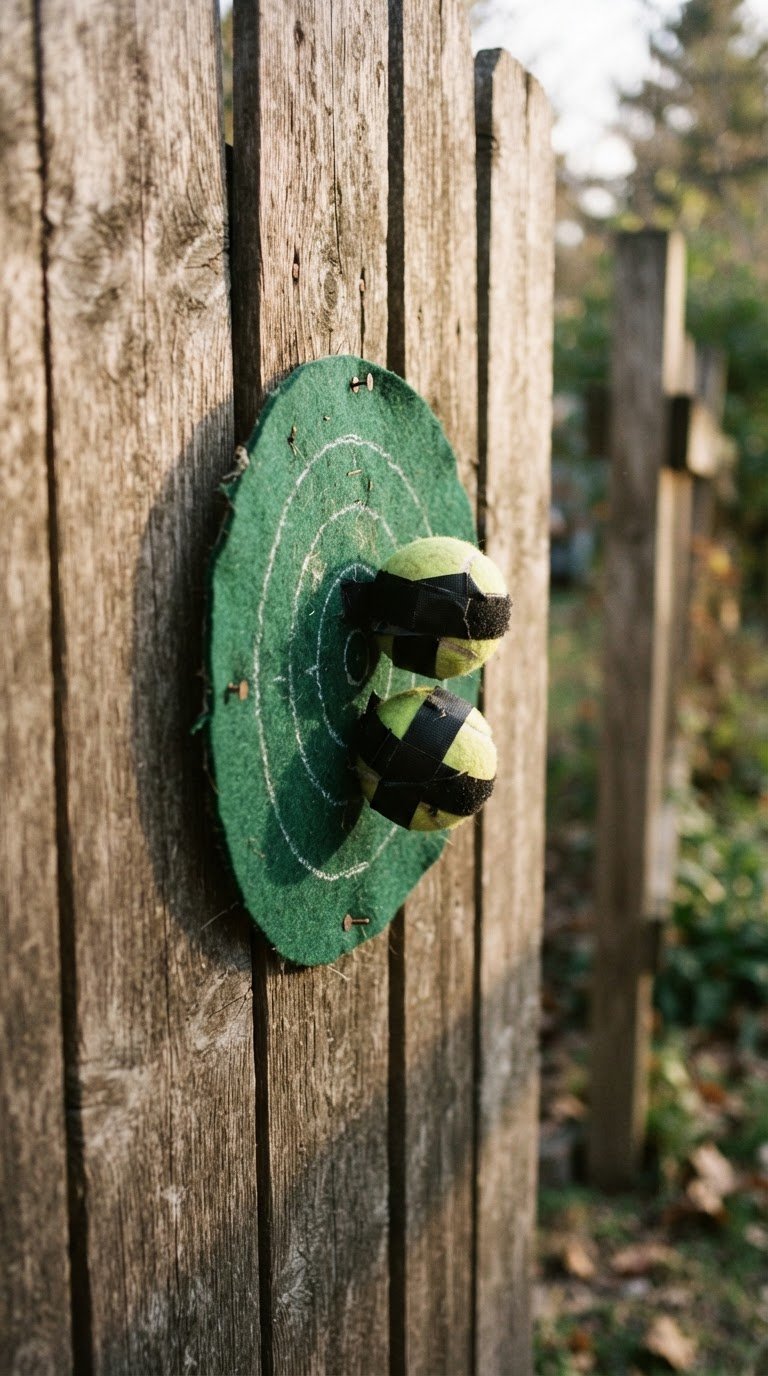
This completely safe, vintage-style target game avoids the plastic waste of modern toys by utilizing a large piece of green felt and classic tennis balls. By wrapping a few strips of adhesive hook-and-loop tape around standard tennis balls, you create a rustic, reusable throwing set that clings perfectly to the felt surface.
You can paint concentric rings on the felt board with simple fabric paint to designate point values. Hang the board from a tree branch or a wooden fence post, and let the kids step up to test their accuracy. It is a quiet, focused game that provides a wonderful contrast to the high-energy running relays.
💡 Pro Tip: Use leftover cardboard from shipping boxes as the backing board to keep this activity entirely free.
The Acrobatic Contortionist Twisting Grid
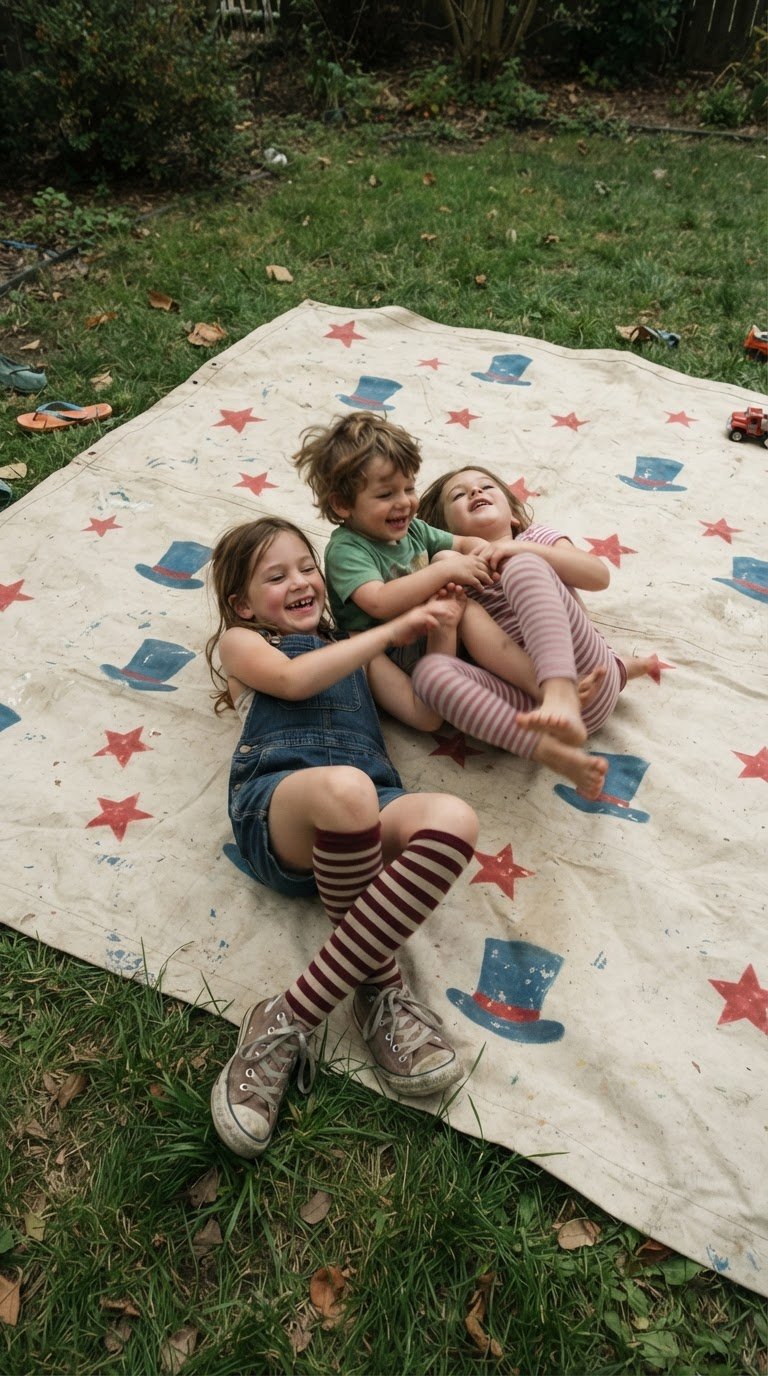
This physical game tests flexibility and spatial awareness on a grand scale. Rather than using a slippery plastic sheet, this version is painted onto a heavy canvas painter’s drop cloth using durable fabric paints. The grid features vintage-style hand-drawn circus icons—such as top hats, roaring lions, unicycles, and circus tents—instead of standard colored dots.
As the spinner lands on different icons, children must twist their bodies into acrobatic shapes to keep their hands and feet on the canvas. The natural texture of the canvas provides excellent grip on the grass, preventing slips while creating a gorgeous, old-world playground aesthetic in your yard.
Planning note: Secure the canvas to the lawn using metal camping stakes to prevent slips and trips.
The Sweet-Scented Cotton Candy Cloud Hunt
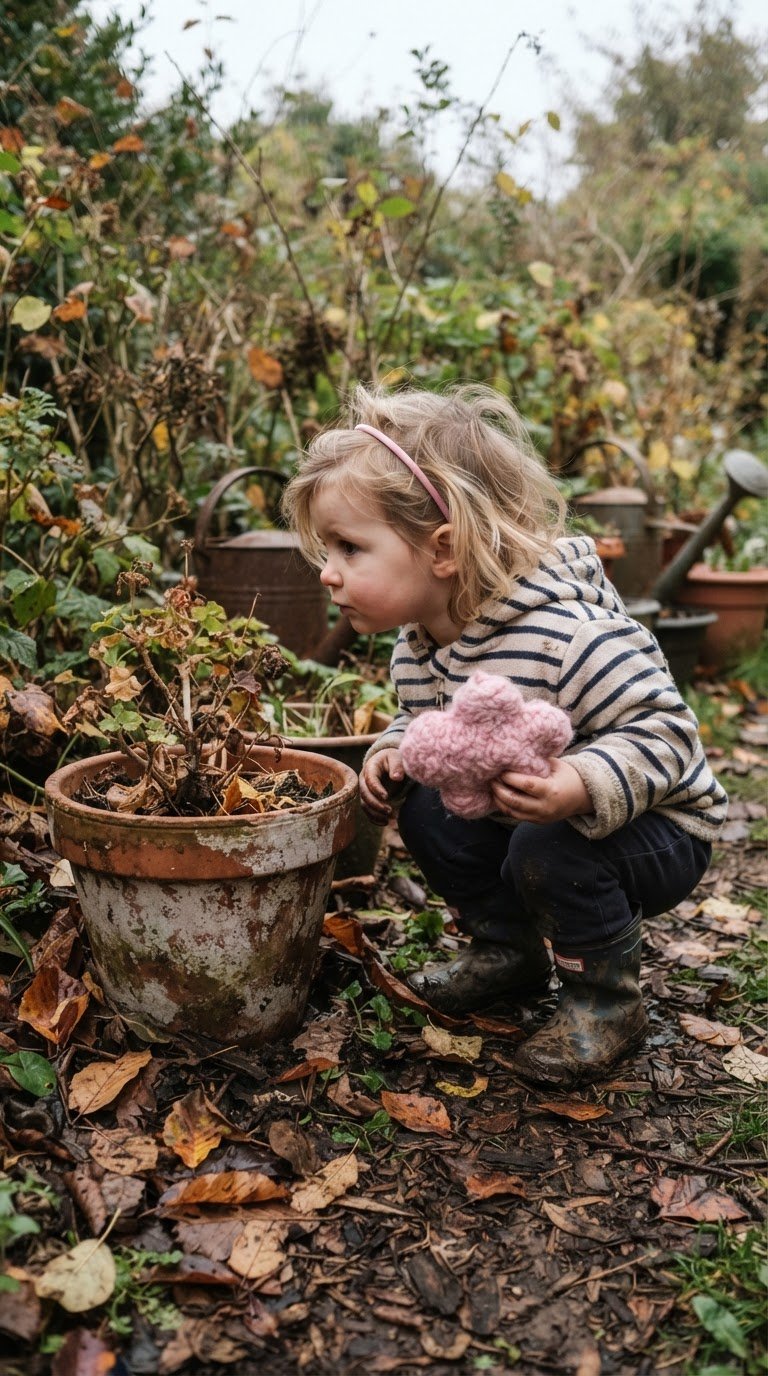
The afternoon heat was softening, and the garden took on a golden glow. The children were quieted by a mysterious announcement: a flock of sweet-scented cotton candy clouds had drifted down from the sky and nested in the trees. Clutching small paper bags, the guests fanned out across the yard, searching behind flowerpots and peering into the low branches of the apple tree.
Instead of hunting for plastic eggs filled with cheap toys, the children searched for fluffy clouds made of pink and blue carded sheep’s wool, lightly scented with strawberry extract. Finding these soft, reusable wool clouds felt like discovering a piece of genuine big top magic. Once gathered, the kids traded their woolen finds at the main table for a real, freshly spun treat, making the hunt both a sensory delight and a peaceful transition activity.
The Feather-on-Nose Balancing Act
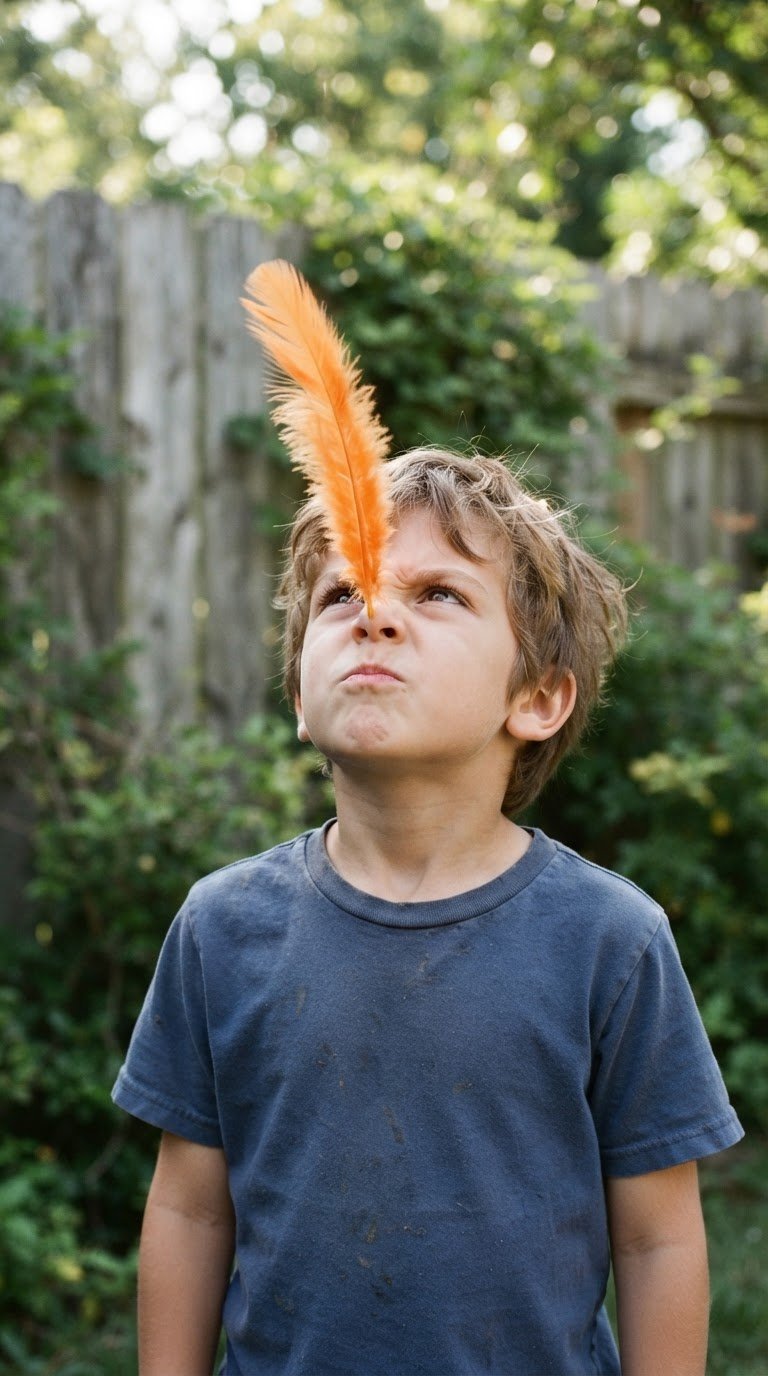
This activity focuses on poise, quiet concentration, and body control. Children are handed large, colorful ostrich feathers and tasked with balancing them upright on the tips of their noses, chins, or flat palms. Because feathers are incredibly light and catch the air easily, they fall slowly, allowing kids to adjust their stance and keep them aloft with a bit of practice.
You can set up a simple walking track across the grass, challenging the children to walk from one end to the other without letting their feather touch the ground. It is a wonderful way to channel high-energy physical movement into a quiet, meditative physical skill.
How to Plan It
- Acquire large, natural feathers that catch the air easily.
- Begin by balancing the feather on an open palm before moving to the nose or chin.
- Challenge older children to spin around once while keeping the feather upright.
The Escape Artist Sack-and-Ribbon Race
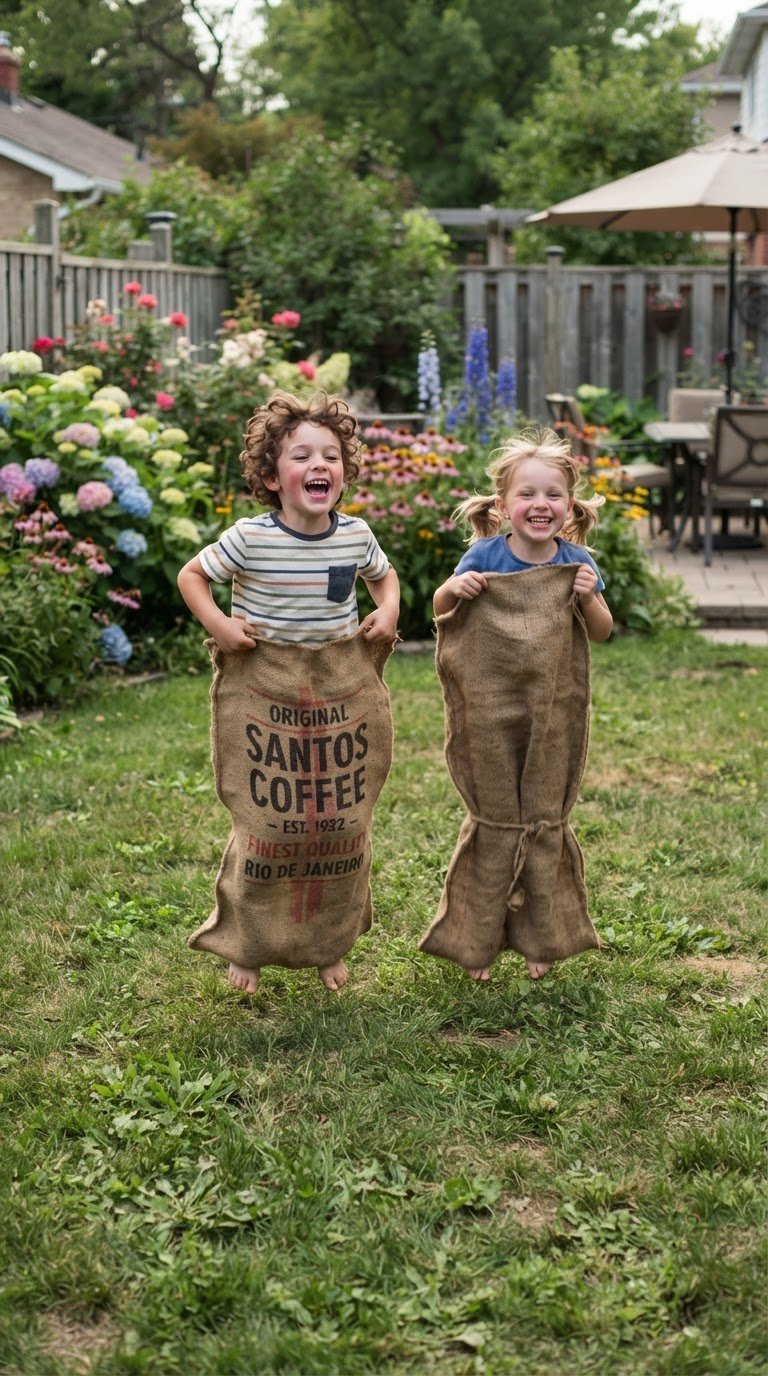
This exciting race pays homage to the legendary escape artists of the early twentieth century. Instead of synthetic bags, children step inside traditional brown burlap potato sacks or large, vintage cotton pillowcases. To add a theatrical escape element, their ankles are loosely bound with a wide, soft satin ribbon that they must waddle out of or slip off before they can begin hopping.
The race is a thrilling display of physical coordination and laughter. The soft grass provides a safe landing for any inevitable tumbles, and the natural materials of the sacks keep the entire experience feeling grounded, rustic, and wonderfully low-tech.
Planning Checklist
- Use natural burlap sacks or large cotton pillowcases to avoid synthetic plastics.
- Ensure ribbons used for ankle binding are loose and easy to pull apart in a single tug.
- Establish a soft grass running track clear of garden toys or patio furniture.
The Vintage Ticket Scavenger Hunt Finale
Best for: Transitioning a high-energy party into a calm, focused group activity before food is served.
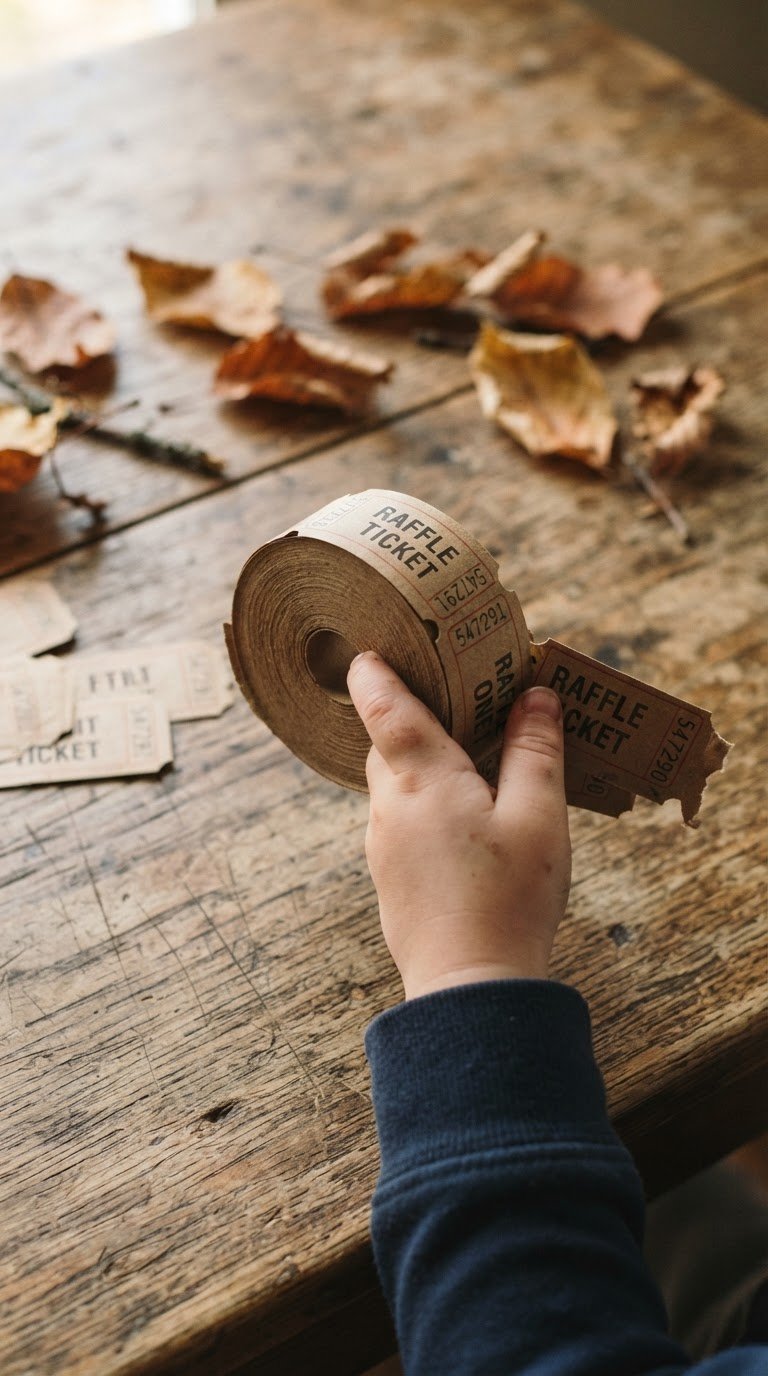
To bring the games to a satisfying conclusion, host a treasure hunt where children search for hidden vintage-style raffle tickets printed on recycled kraft paper. These tickets are hidden in plain sight around the backyard—tucked into tree bark, nestled under patio chairs, and resting on window sills.
Once all the tickets are collected, the children gather at the main table to pool their findings. This cooperative finale encourages teamwork rather than individual competition. The pooled tickets are then officially presented to the Ringmaster to ‘unlock’ the grand finale: the cutting of the birthday cake under the shade of the big top tent.
To successfully steer the high-energy excitement of your circus games into a relaxed afternoon feast, use a simple transition strategy: 1. Host the wilder games (like the relay and sack race) first; 2. Transition to stationary balancing games to calm heart rates; 3. Use the ticket hunt to gather everyone at the table; 4. Present the cake under the shade of your big top canopy. This flow ensures your little performers finish the day happy, tired, and ready for their well-earned circus treats.